An old motorcycle with fifty thousand kilometers on the odometer doesn't ask to be polished.
You look at the chain slap on the swingarm. You look at the discoloration where exhaust headers met mountain water and oxidized into a permanent burnt blue. You look at the footpegs filed down at the edges from corners taken a little too low.
Next month, on the 8th of October, my own clock hits fifty.
People my age tend to talk in the vocabulary of retention. How to hold on. How to preserve the hairline, hedge the portfolio, slow the metabolic decline, keep the social circle tight, insure against the unexpected.
Middle-class India turns preservation into an art form. I grew up walking through rooms where the plastic film stayed on the remote control until the buttons turned yellow underneath, where bubble wrap from new appliances was folded into drawers like dowry.
Not our house. The uncles' houses. The neighbours' houses. Every house on the street except ours.
And still, somehow, I caught it.
I spent the first half of my life quietly subscribing to an anxiety nobody at my own dinner table had taught me. I stammered. Half my letters never made it out of my mouth. The ones that did were barely heard.
So I kept my strongest impulses in neutral, waiting for some imaginary green light — some afternoon in the future when all debts would be cleared, all uncertainties dissolved, and it would finally be safe to step on the throttle.
It took me five decades to realize there is no green light. The light was green the moment I was born. The engine has been idling all along, burning fuel whether I was moving or parked.
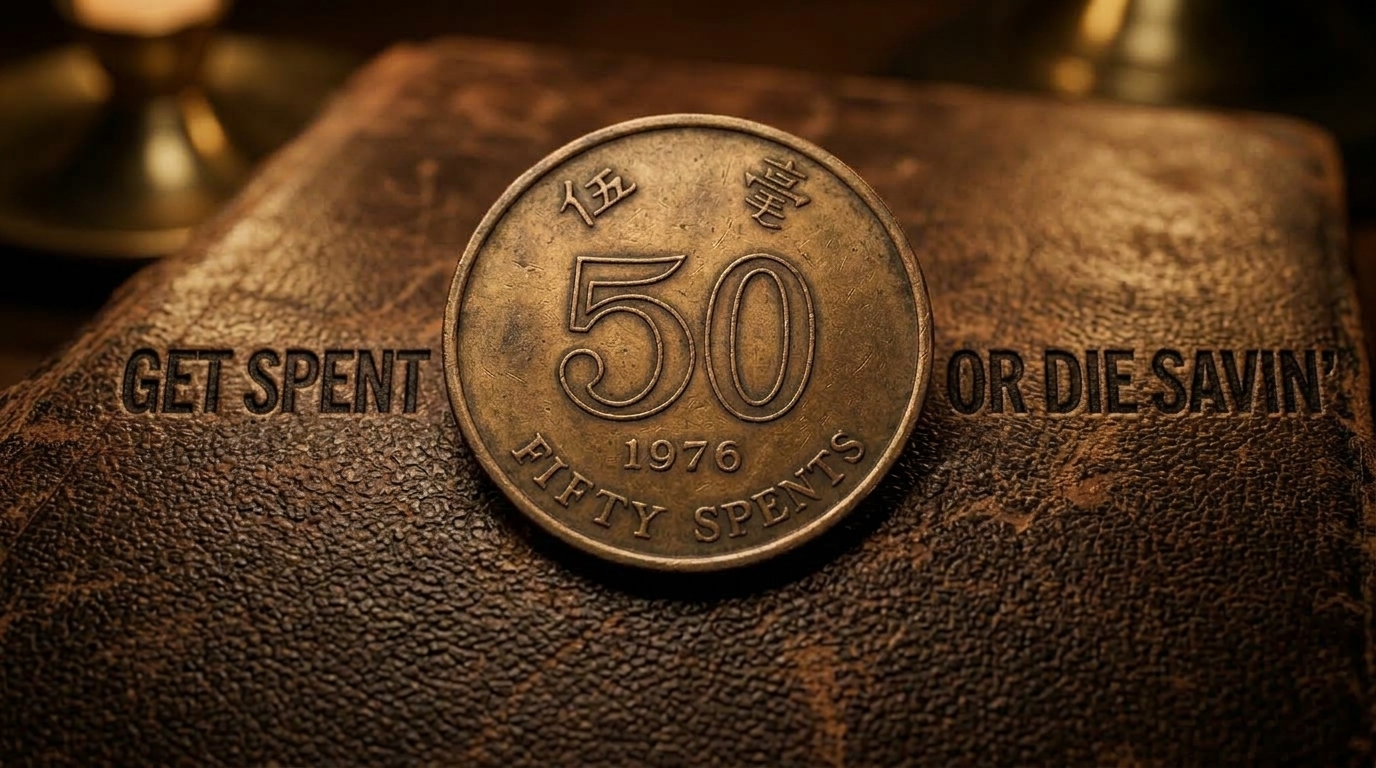
ज़िंदगी कोई गुल्लक नहीं है जिसे सहेज कर रखना है;
यह तो वो खुल्ले सिक्के हैं, जिन्हें खनकने के लिए खर्च होना ही पड़ता है।
The only inheritance I care about came from two people who were terrible at calculating safety.
In a salaried world, my parents were considered reckless. They didn't build a bunker. If my father had fifty rupees in his pocket and someone needed forty, he didn't calculate the risk — he opened his palm.
One evening he stepped out of the house to buy groceries, and I muttered from the couch that I wanted a video cassette player. We were not the kind of family that had money for random childhood whims. He finished buying the vegetables, walked straight into the electronics shop next door, and signed up for an EMI he couldn't comfortably afford.
He didn't give a lecture on bachat. He just carried the machine home with the groceries.
The uncles whispered, "Aise chaloge to aage kya bachega?"
What remained wasn't a bank balance. What remained was an appetite.
Here is where the inheritance gets complicated.
Papa's spending had a direction. The forty rupees went to a person. The trip had people in it. Even his stubbornness was pointed outward — spent getting a stranger what he was owed. The VCR was for his son.
Most of what I have spent, I have spent alone.
The climbs. The empty trail. Point A to a point where the distance stopped being a number.
A throttle hand, a mountain, and nobody else in the frame.
I have called that courage for twenty years. Some of it was. Some of it was just a more scenic way of leaving the room.
I don't know the ratio. I'm about to turn fifty and I still don't know the ratio.
So when I look back at where the currency went, I don't look at savings accounts. I look at the tarmac, and at the places where even the tarmac gave up.
I think of riding solo all the way down from Manang, back home.
If you know that trail, you know it isn't a road; it's a dare. A narrow ledge hacked out of sheer Himalayan rock with the Marsyangdi roaring white hundreds of feet straight down on the right, and naked overhanging cliffs on the left.
Loose shale, blind hairpin drops, water crossings where freezing melt pours across the rock daring you to lose traction. No backup truck. No riding buddy to haul me out if the bike went down on its side. Just the clutch, and a throttle hand that couldn't afford a single microsecond of hesitation.
You don't negotiate with a trail like that. You don't get to save anything for later.
I think of that May afternoon on the Agra–Lucknow Expressway when the piston seized solid in 45°C heat, boots sticking to softening asphalt as I pushed two hundred kilos of dead metal toward a distant sliver of overpass shade. Or Sikkim, up toward Gurudongmar, crossing bridges half-washed into milky brown torrents, calculating fuel against fresh landslides, choosing the throttle anyway.
None of those hours bought anything I can show a banker. You can't liquidate the silence on a cliffside below Manang. You can't pledge a seized engine as collateral.
जो बचा लिया गया, वो तो महज़ मोम है;
जो खर्च हो गया, वही रौशनी है।
The one thing I refuse to spend anymore is temper.
By my forties I had found the words. I would not stop using them.
I was exhausting to be around. I entered conversations like an auditor with a red pen. If someone had a flawed premise, I felt a moral obligation to dismantle it. I stayed awake at 2 a.m. constructing airtight arguments for people whose worldview was never going to meet mine.
What a pointless expenditure of life force.
Reality isn't a debate you win. It's a room you inhabit.
Now, when someone misunderstands me, I don't draft a thesis. I let the silence sit. Not out of defeat — the remaining fuel is just too precious to burn on noise.
Or maybe that's the story I tell about an engine that learned friction makes heat, not motion.
Last week my family asked what I wanted for the 8th of October. A milestone birthday, they said. It needs a milestone gift.
I said, "Dunno. Maybe just quiet time to finish the book. Dunno."
I still haven't given them a proper answer.
In the dining room, behind the glass door of the wall unit, the good dinner set is still sitting. Forty-one pieces. Bone china, untouched, waiting for a special occasion that has been forty years in transit.
On Wednesday I'm going to open that cabinet.
One plate. Dal and rice. The balcony. An ordinary weekday.
Just one.
खोज जारी है।
— Ash