Hello from the other side,
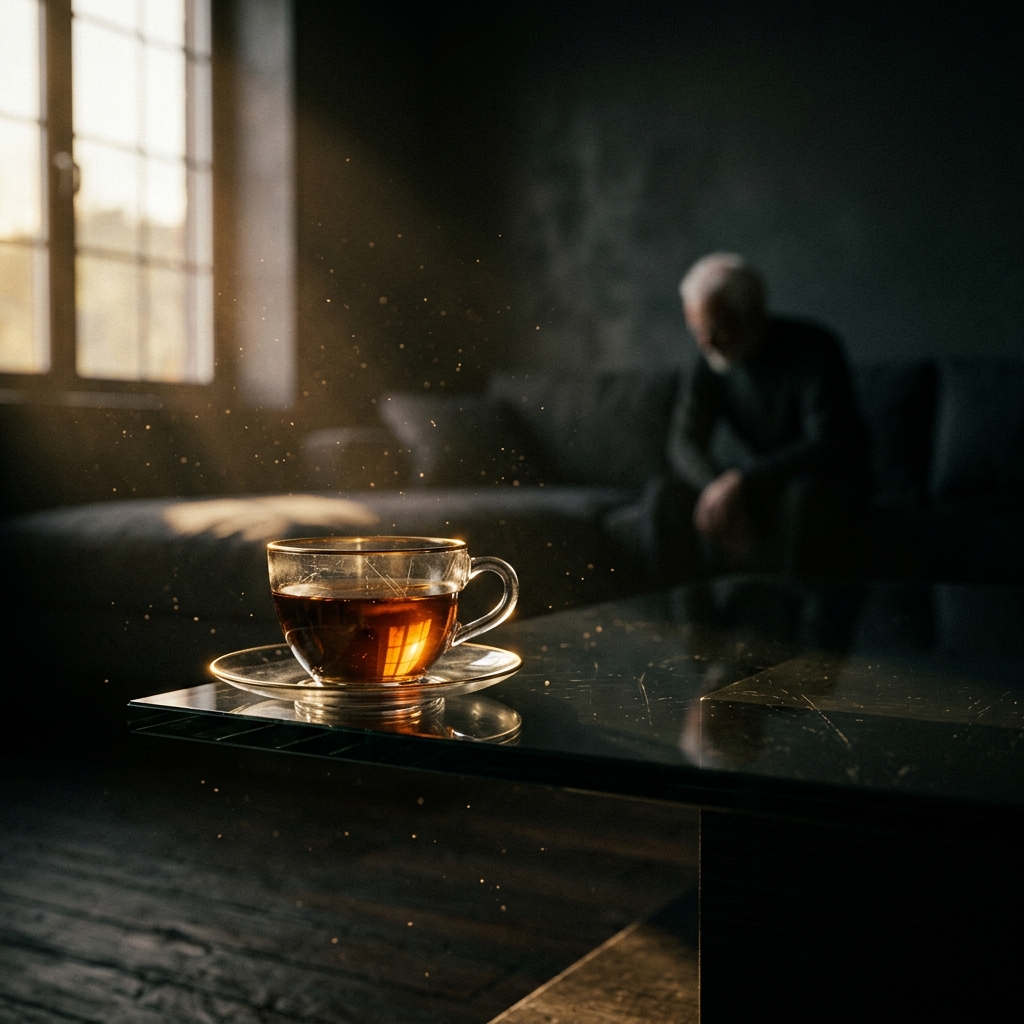
Meri massi ke ghar, tilak wale din. Sofa bhara hua tha. Do mamu, ek chaacha, ek unka dost jise main pehchanta nahi tha. Chai kaanch ke glass mein, saucer ke saath — jaise us ghar mein har cheez ko apni jagah maloom thi.
Aur beech mein, khadi, meri cousin.
Woh keh rahi thi ki woh job nahi chhodegi. Shaadi ke baad bhi.
Kisi ne kuch nahi kaha. Fridge ki awaaz aa rahi thi. Aur ek chacha apni saucer ko baar baar seedha kar rahe the, jaise woh hi kamre mein sabse zaroori kaam ho.
Phir Uncle ne cup neeche rakha.
"Aurat aurat ki tarah nahi rahi hai," unhone kaha. Kisi se nahi. Sab se.
Phir mere taraf dekha. Aur baaki teen mardon ki taraf.
Koi nahi hila. Main bhi nahi.
Main us waqt chaubees saal ka tha. Aur main sofa par baitha tha. Andar.
Uncle sahi the ek baat mein — main sach mein andar baitha tha, sun raha tha, aur mujhe bura nahi lag raha tha. Yeh baat unka darr dikhati thi. Mujhe abhi tak nahi pata tha... ki kyun?
I have carried that line for years now, and I still don't fully have it.
— Letters from the Margin, AshVaani
The anger in it was easy to name. I grew up around men who mistook control for love — so I clocked it fast, wrote whole chapters about it, moved on feeling clever.
What I didn't have a name for was the fear sitting just under the anger.
Because Uncle wasn't wrong about everything.
The room he grew up in — bahar for men, andar for women, the walls doing the parenting nobody had to do out loud — that room is actually disappearing. Not slowly either. Ek generation mein.
He isn't imagining the loss.
He is standing inside it, watching it happen in real time, at his own niece's tilak, with a saucer in his hand.
There is a number I read once and didn't feel — over twenty years, the average Indian home quietly losing almost one full person. A statistic like that sits politely in a paragraph. It did not sit politely in me until that sofa. Until I counted — four men, one glass table, and a silence that had a shape to it, like something had already left the room before we noticed it going.
That's when the word finally arrived. Not "nuclear family." Not "modernisation." The word my book keeps circling and I never once said out loud at a family function:
Uncle didn't lose "the family." He lost the bundle. And nobody handed him a map for what comes after a bundle comes undone.
Naam English mein mila. Nuksaan Hindi mein ho raha tha. Barson se.
I don't think I've forgiven myself yet for finding that word calming when it clearly wasn't calming for him.
Par line ka doosra aadha hissa mere saath sabse zyada der tak ruka.
"Mard aurat leke baithe hain andar."
Uncle ne isse gaali ki tarah bola tha. Kamzori ki tarah. Jaise mard ke andar aurat hona koi leak hai — band karo, warna sab beh jayega.
Par ek second ruko.
Aurat hamesha andar hi toh thi.
Ghar ke andar. Woh saara kaam karti hui jo kisi register mein nahi chadhta tha. Chai jo apne aap ban jaati thi. Dawai jo time pe haath mein aa jaati thi. Mehmaan ke jaane ke baad wali safai. Sabki pasand yaad rakhna. Apni pasand ka kya hua — yeh sawaal hi delete.
Woh kaam bhi usi bundle mein bandha tha. Bina naam ke. Bina receipt ke.
Phir bundle khula. Aurat ghar ke andar se nikal gayi — office gayi, duniya gayi, apne naam ki zameen dhoondhne gayi. Theek kiya.
Par woh kaam? Woh kaam kahin nahi gaya. Kaam ne bas ghar badal liya.
Care ki koi receipt nahi hoti. Blame ki hamesha hoti hai.
— Letters from the Margin, AshVaani
Main woh aadmi hoon jo scooter service pe khud le jaata hai — bina bataye. Jo bill due date se pehle bhar deta hai taaki ghar mein woh conversation kabhi ho hi na. Jo raasta badal deta hai taaki andhera usse na mile jo mere saath chal rahi hai. Jo "ho jayega" bolta hai — aur phir chupchaap use ho jaana banata hai.
Kisi ne kabhi notice nahi kiya. Notice ke liye tha bhi nahi.
Par yahan ek cheez hai jo main likhna nahi chahta tha. Jab kuch toot-ta hai — ilzaam mere hisse aata hai. Un cheezon ka jo maine ki nahi. Sirf isliye ki jo sab sambhalta hai, girne pe naam bhi usi ka aata hai.
Care ki koi receipt nahi hoti. Blame ki hamesha hoti hai.
Toh Uncle — aap sahi the. Mard aurat leke baithe hain andar. Par isliye nahi ki mard kamzor ho gaye. Isliye ki bundle khula, aur uska sabse bhaari hissa — woh bina-naam wala kaam — kisi ke toh hisse aana tha.
Aapne insult boli thi. Nikli observation.
Main khud bhi kabhi woh aadmi tha jo chup reh gaya. Ek baar. Apni behen ke liye. Jab usne kaha ki woh apne pati se alag rehne wali hai, aur ghar mein sannata tha, aur mujhse sirf ek shabd nikla —
"Theek hai."
Bas. Theek hai. Uska matlab tha — main tumhare saath hoon. Lekin us waqt laga jaise main kuch chhod raha hoon. Koi purani zimmedari, jo kabhi meri thi hi nahi — sirf mujhe sounp di gayi thi, bina poochhe.
Here's what I actually think Uncle was afraid of, and I'm not saying it to mock him — I've been the version of him that hasn't fully arrived yet:
He built his entire sense of worth on being the one who decided who gets to speak, and who has to wait.
If the men around him stop needing him to make that decision — then what is he for.
Nobody answered that at the tilak. It wasn't really a question. It was a man checking if the floor was still under him.
It wasn't.
The easy answer — Uncle, you're wrong, get over it — has never once changed a mind at a family function. I've watched it fail in real time.
Uncle was raised inside a bargain: give up forty years of your own voice, and in exchange, everyone under your roof owes you their silence when it's finally your turn to speak.
He kept his end.
The turn just isn't coming — not because the world turned cruel, but because the whole bargain is being cancelled. For him. For the women who kept the same bargain and got far less out of it than he ever did. For everyone.
Meri cousin ne job nahi chhodi.
Uske hone wale pati bhi sofa par baithe the us din. Chup. But it wasn't Uncle's kind of quiet. Woh sun rahe the.
I don't know yet if that's enough. Listening doesn't repair forty years by itself — not the silence inside those old houses, not the fear in men like Uncle who did everything they were told and still ended up alone in a smaller room than they were promised.
But something does happen in a house when a man goes quiet on purpose, to hear someone instead of to correct her.
Kuch reh jaata hai kamre mein. Jo pehle kabhi nahi tha.
Main abhi bhi andar baitha hoon. Uncle — main abhi bhi nahi utha.
Sun raha hoon, khoj raha hoon... jaari hai.
— Ash
The questions we carry about the rooms we were raised in — they rarely get answered at the dining table. Sometimes they find their way into books.
Explore the Books